
Retroreflectometer Test Services: Why Road Marking Visibility Matters
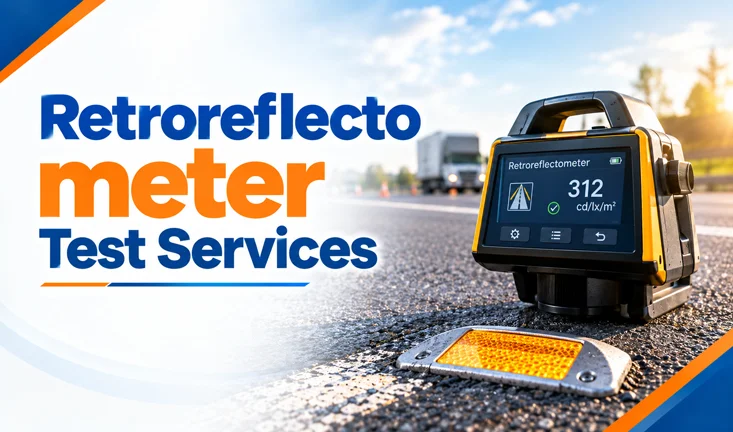
Road markings guide drivers, communicate lane boundaries and support safe navigation, particularly during darkness and difficult weather conditions.
However, the visibility of pavement markings can decrease as materials wear, become dirty or deteriorate.
Professional Retroreflectometer Test Services help assess the retroreflective performance of road markings and support maintenance decisions.
What Is Retroreflectivity?
Retroreflectivity describes the ability of a material to return incident light toward its source.
For road markings, this is particularly important because vehicle headlights illuminate the markings during nighttime driving.
Retroreflective materials help return light toward drivers, making lane lines and other pavement markings easier to see.
What Does a Retroreflectometer Measure?
A retroreflectometer measures the retroreflective characteristics of markings or signs under defined measurement conditions.
Depending on the instrument, measurements may assess nighttime retroreflection, daytime visibility or performance under wet conditions.
The results help road authorities evaluate whether markings meet applicable performance requirements.
Where Is Retroreflectometer Testing Used?
Common applications include:
- Highway lane markings
- Pedestrian crossings
- Airport pavement markings
- Road maintenance projects
- Newly installed pavement markings
- Existing traffic control markings
Testing may be carried out after installation and periodically during the service life of road markings.
Road Marking and Traffic Sign Testing
Different instruments and measurement geometries may be required for different retroreflective surfaces.
A Retroreflectometer For Road Marking is relevant for investigating pavement marking performance.
For vertical traffic control devices, engineers may explore a Retroreflectometer For Traffic Sign .
Selecting the appropriate instrument is essential because pavement markings and traffic signs are evaluated under different geometric conditions.
Why Regular Testing Is Valuable
Retroreflective performance can change because of traffic wear, contamination, weather exposure and material deterioration.
Regular measurements provide objective information for planning repainting, replacement and maintenance.
They also help road agencies compare installed materials and assess their performance over time.
Conclusion
Retroreflectometer testing supports road safety by providing measurable information about the visibility of pavement markings and traffic signs.
Using appropriate instruments and testing procedures helps infrastructure operators make informed maintenance decisions.