
Retroreflectometer for Road Marking: Measuring Visibility Where It Matters
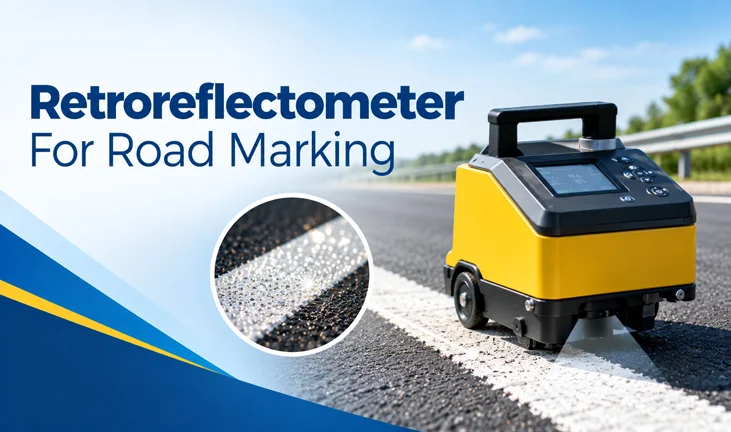
Clear road markings are essential for guiding vehicles and helping drivers understand road layouts.
During nighttime driving, motorists depend heavily on the ability of pavement markings to reflect light from vehicle headlights.
A Retroreflectometer For Road Marking provides measurable information about the retroreflective performance of pavement markings.
Why Road Marking Visibility Matters
Road markings communicate important information, including lane boundaries, stopping positions and changes in road alignment.
Their visibility can be affected by several factors:
- Traffic wear
- Surface contamination
- Material aging
- Rain and moisture
- Installation quality
- Environmental exposure
Regular evaluation helps road authorities understand when markings may require maintenance or replacement.
How Does a Retroreflectometer Work?
A retroreflectometer measures light returned from a surface under defined illumination and observation conditions.
For road markings, nighttime retroreflection is commonly represented by the coefficient RL.
Some instruments also measure daytime visibility or performance under wet conditions.
The testing method and instrument must be suitable for the marking type and applicable specification.
Where Is Road Marking Testing Required?
Retroreflectometers are used in several infrastructure applications.
Highway Projects
Testing helps assess newly installed lane markings and existing road markings.
Urban Roads
Road agencies may evaluate crossings, lane boundaries and other traffic guidance markings.
Airports
Pavement marking visibility can be investigated as part of airport infrastructure maintenance.
Road Maintenance Programmes
Periodic measurements help identify markings that may require repainting or replacement.
Road Marking and Traffic Sign Retroreflection
Road markings and vertical traffic signs have different measurement geometries.
Organisations assessing vertical signs should explore a Retroreflectometer For Traffic Sign rather than assume that every pavement marking instrument is suitable for sign testing.
Choosing Suitable Testing Equipment
Before purchasing an instrument, consider the relevant standards, measurement capabilities, portability, calibration and reporting requirements.
For broader evaluation projects, professional Retroreflectometer Test Services may support pavement marking assessments.
Conclusion
Retroreflectometer testing provides objective information about road marking visibility.
Appropriate measurements help infrastructure operators evaluate marking performance and make informed maintenance decisions.